
Wholesale distributors and cash-and-carry shops.
Wholesale POS with credit ledger and carton billing
Wholesale counters sell in packs and cartons, often on credit, with frequent receiving. BezPOS keeps units, ledgers, and stock updates on the same local system.
Who this is for
Wholesale distributors and cash-and-carry shops bill in packs and cartons, often on party-wise credit, with frequent inbound receiving. A retail-only “piece” POS breaks that model.
BezPOS is offline-first and stores data locally. It does not provide cloud synchronization between locations. Google Drive is for backup of that local data.
Daily problems at this counter
Retail POS that only knows “piece” breaks carton billing and forces duplicate products for every pack size.
Party-wise credit is the business, not an exception. Without a customer ledger, balances live in registers only one cashier trusts.
Receiving must update stock the same day. Delayed Excel updates create phantom inventory and angry parties.
Month-end stock value is a bank conversation, not a guess — yet many wholesalers still estimate rack value from memory.
- Retail POS that only knows ‘piece’ breaks carton billing.
- Party-wise credit is the business, not an exception.
- Receiving must update stock the same day.
- Month-end stock value is a bank conversation, not a guess.
How BezPOS features solve them
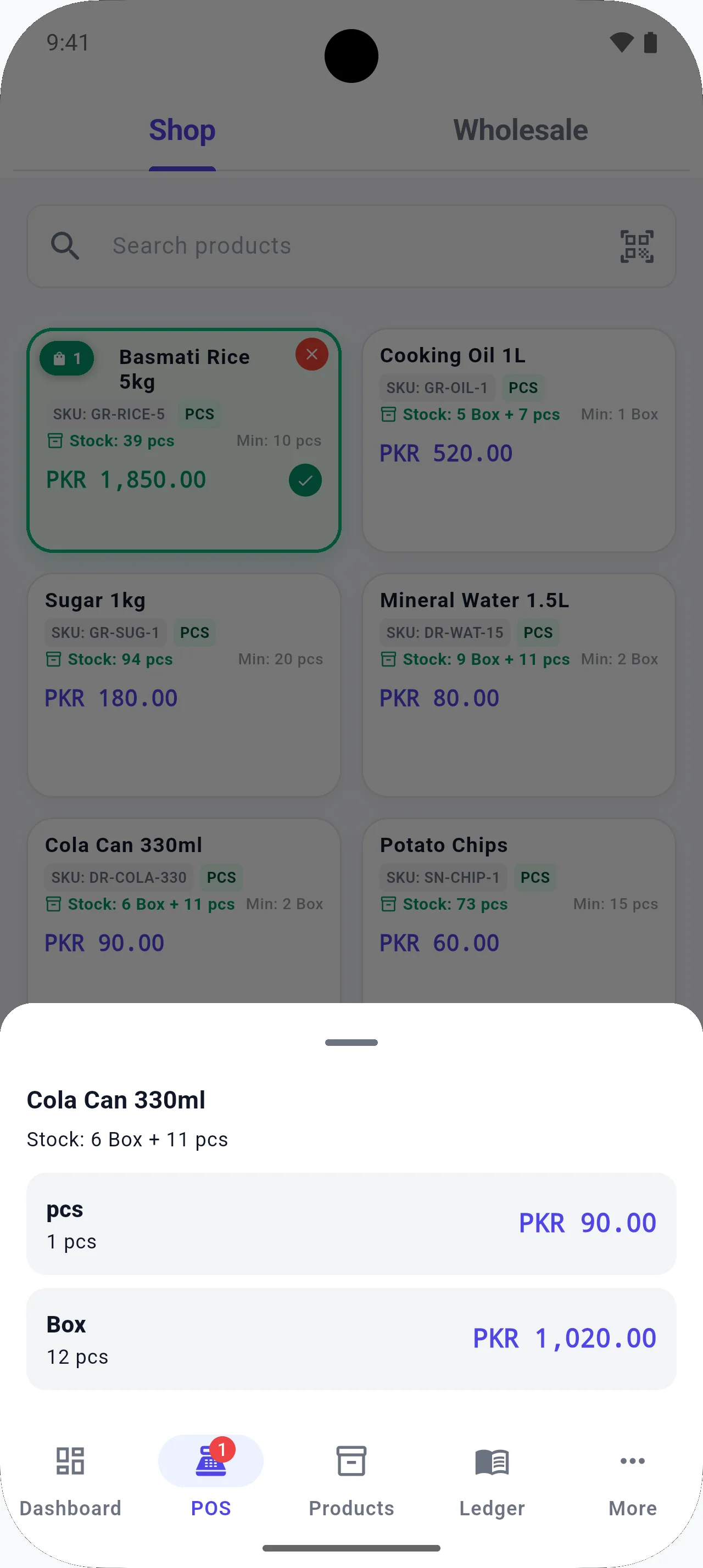
Multi-unit selling supports packs, cartons, and other units you define for wholesale invoicing.
Customer ledger handles party credit; supplier ledger handles distributor payables.
Stock orders and receiving update inventory when inbound stock arrives.
Offline POS keeps carton billing moving without a live cloud shop database. Reports cover sales, profit, and stock value from the same local data.
- Sell in packs, cartons, and other units you define.
- Use customer ledger for party credit.
- Use supplier ledger for distributor payables.
- Receive stock and let inventory update.
Running the counter day to day
Wholesale is unit math plus trust. Carton billing without multi-unit support forces duplicate SKUs or mental conversions that break stock. Configure selling units the way you invoice parties, then hold orders while pickers finish so the bill matches what left the godown.
Party-wise credit is the operating system of many cash-and-carry counters. A customer ledger is not optional polish — it is how you know who can take another carton. Pair it with a supplier ledger so inbound payables do not live only in a distributor’s reminder call.
Do not expect multi-warehouse cloud sync from an offline-first shop POS. BezPOS stores data on the device and uses Google Drive for backup, not live sync between locations. If you run one godown counter well, that clarity beats a half-configured cloud promise.
Pick-and-bill discipline matters: hold the order while the picker finishes, then finalize quantities that match what left the rack. Billing first and picking later is how carton shortages become customer disputes.
Review stock value and party balances together at month end. Credit that looks fine in isolation can hide an inventory hole — or the reverse. The reports only help if receiving stayed honest all month.
Local context
Wholesale trade in Pakistan often runs on trust, udhaar, and carton quantities. A wholesale POS with a credit ledger and multi-unit selling keeps party balances and stock receiving in one place — dukan ka hisab kitab on the device at the godown or cash-and-carry counter.
Example workflow
- Set products with wholesale selling units.
- Bill carton quantities; hold an order while a picker finishes.
- Record payments against customer ledger.
- Receive inbound stock from suppliers.
- Review sales, profit, and stock value reports.
Relevant features
Related guides
FAQ
Questions for this shop type
Can wholesale shops bill in cartons?
Yes, by configuring multiple units and selling units on each product to match how you invoice parties.
Is there multi-warehouse cloud sync?
BezPOS is offline-first and stores data locally on the device. It does not provide cloud synchronization between locations. Google Drive is for backup of that local data.
Can I keep party-wise credit?
Yes. The customer ledger is designed for credit sales and payments against each party.
How does receiving work for inbound stock?
Receive stock against an order and inventory updates automatically so quantities are not typed twice.
Get started
Run your business with BezPOS.
Put billing, stock, ledgers, and expenses on the device you already use at the counter.